





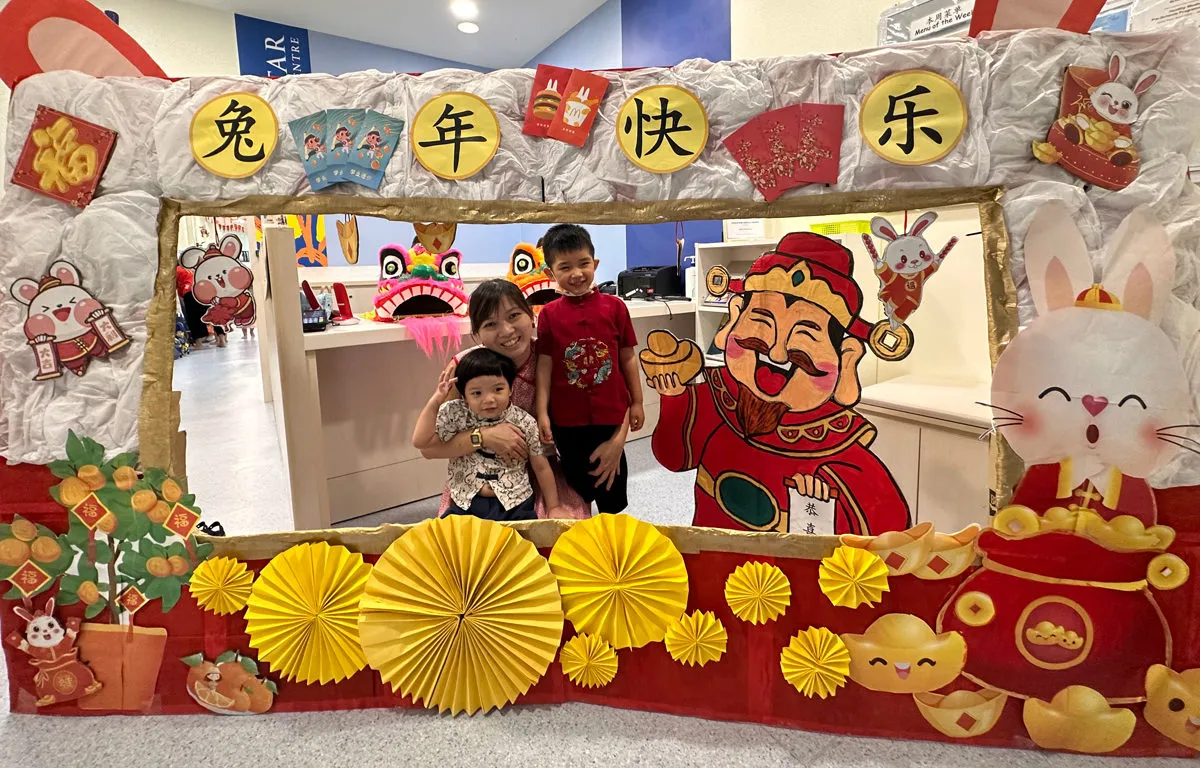
ELFA Preschools’ Chinese immersion activity at their bilingual preschool
As leaders in early childhood education, we often meet parents who are enthusiastic about giving their children the gift of bilingualism. The most common question we hear is, “When is the best time to start preschool?”
While learning can happen at any age, decades of research and our own experience at ELFA Preschool point to a clear and decisive answer: the preschool years represent a unique, time-sensitive golden window for language acquisition.
This article will explain why it is essential to start Mandarin immersion in preschool and not later, exploring the science, the cognitive benefits, and the practical long-term advantages for your child. At ELFA Preschool, Mandarin exposure begins from the infant level, not only in playgroup, nursery or kindergarten. Even our youngest children engage with Mandarin daily through songs, stories, routines and warm interactions with their teachers. This early and consistent immersion helps them pick up pronunciation, vocabulary and comprehension naturally, in the same way they acquire their first language. ELFA’s strength in Mandarin is one of many reasons why it is Singapore’s most awarded preschool brand in China.
Key Takeaways
- A preschooler’s brain is in a peak state of neuroplasticity, allowing them to acquire languages naturally, much like they learn their first language.
- Early bilingualism provides significant cognitive benefits, enhancing problem-solving, multitasking, and critical thinking skills that last a lifetime.
- Starting in preschool lays an intuitive, deep-rooted foundation in Mandarin tones and grammar that is much harder to achieve in primary school.
- A quality bilingual preschool offers more than language; it cultivates cultural empathy, global awareness, and holistic character building.
The ‘Sponge’ Brain: The Science Behind Early Language Acquisition
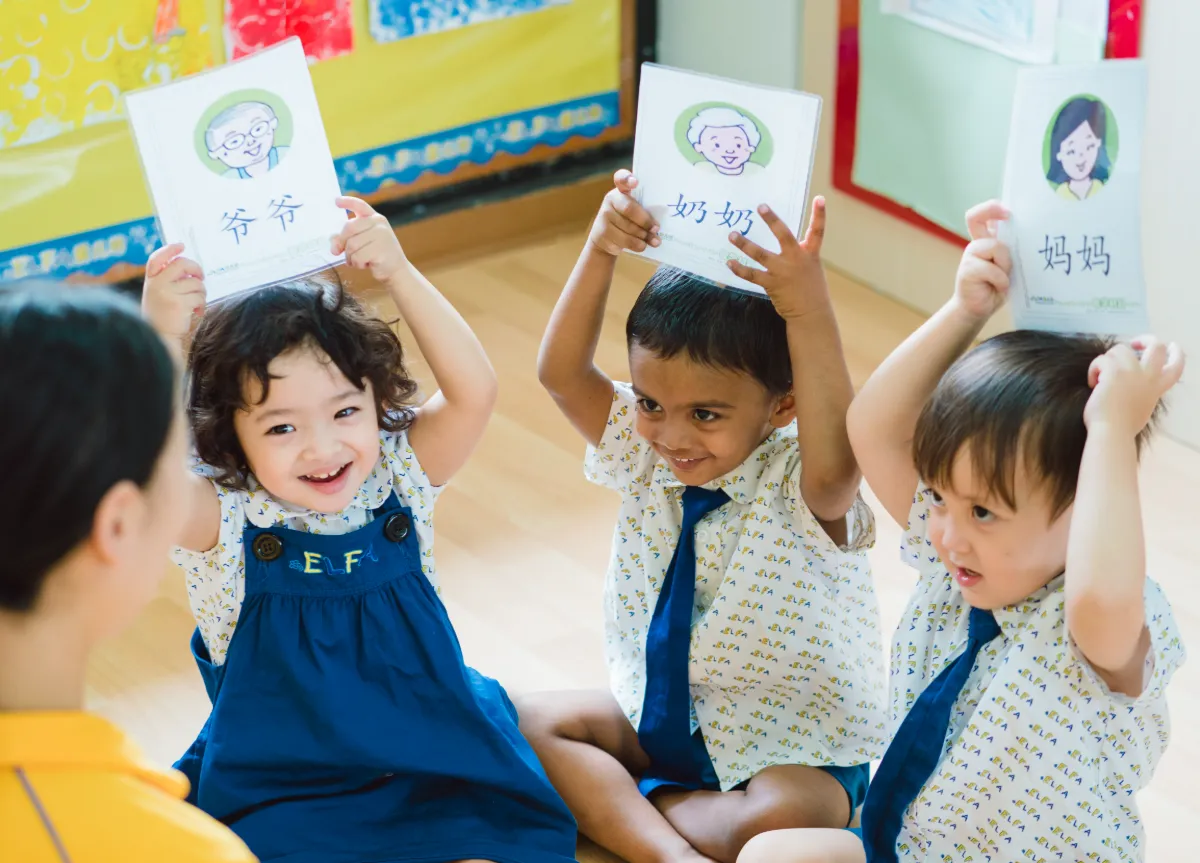
ELFA Preschool children learn Chinese characters and family relationships in a teacher-guided classroom setting
The idea that young children are like “sponges” is more than a saying; it’s grounded in neuroscience. Between birth and age five, the brain develops faster than at any other point, forming trillions of neural connections. Early childhood, especially the years before age five, is therefore the prime window for language absorption. Starting Mandarin immersion during this stage makes it much easier for children to grasp tones, structure and vocabulary, and it lays a foundation that is very difficult to replicate if they only begin in primary school. This is what researchers call the “sensitive” or “critical period” for language.
During this period, children can acquire languages intuitively, not through memorisation but through immersion in songs, stories, and play. Mandarin is especially time-sensitive, since infants are born with the ability to distinguish tone differences but lose it if not exposed early.
This neurological flexibility also explains why it becomes harder to learn a language as we age. The brain undergoes a process of “synaptic pruning,” in which it eliminates neural connections that are not being used to become more efficient. For a child, this means the brain strengthens the pathways for the sounds and grammar they hear daily, while the paths for unfamiliar languages weaken.
More Than Words: The Cognitive Superpowers of a Bilingual Brain
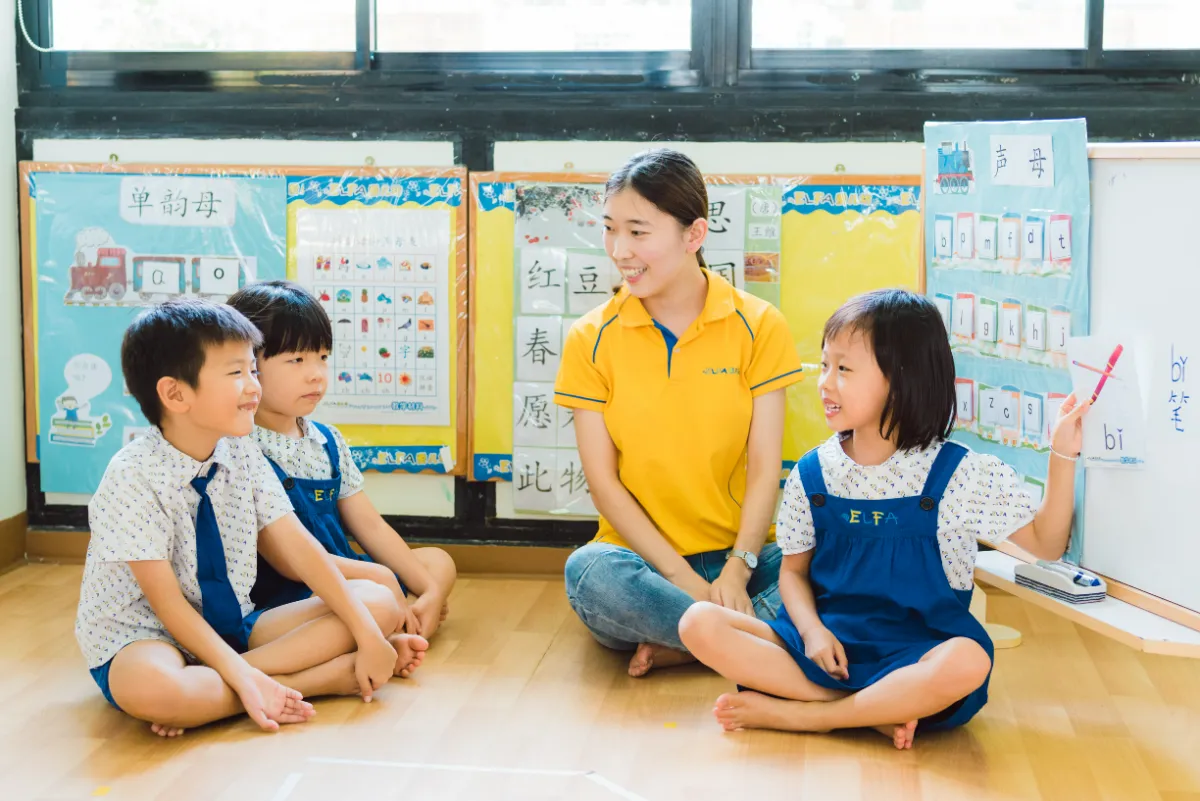
Kindergarten 2 children from ELFA Preschool learn hanyu pinyin (HYPY) in preparation for the YCT Level II assessment
The benefits of bilingualism extend far beyond just being able to speak more than one language. A growing body of research demonstrates that an early age start in a bilingual environment gives children a distinct cognitive edge.
Enhanced Problem-Solving and Critical Thinking
Bilingual children consistently show advantages in what is known as “executive function.” This is the brain control centre for focusing, planning, and solving complex problems. Bilingual preschoolers were better at sorting objects by changing rules (e.g., sorting by colour, then sorting by shape), demonstrating superior mental flexibility.
Improved Memory and Multitasking Abilities
The bilingual brain is constantly working to manage two language systems, choosing which one to use and which to inhibit at any given moment. This continuous mental workout strengthens the dorsolateral prefrontal cortex, the part of the brain linked to attention and working memory. This translates into better multitasking capabilities later in life.
A Boost in Creativity and Mental Flexibility
Bilingual individuals often approach problems from multiple perspectives, a direct result of understanding that a single object or concept has different names and cultural associations in different languages. This fosters divergent thinking, a key component of creativity.
At ELFA Preschool, our Mandarin immersion preschool programme is designed to build proficiency across the four core Mandarin skills “听、说、读、写”:
- Listening (听): Children tune in to the sounds, tones and rhythm of Mandarin through conversations, music, rhymes and stories woven into daily routines.
- Speaking (说): Regular interaction with teachers and peers builds their confidence to communicate in Mandarin naturally during play, mealtimes and classroom activities.
- Reading (读): Children are introduced to Chinese characters through picture cues, word cards, stories and age-appropriate early literacy materials.
- Writing (写): By K2, children practise basic strokes and characters, preparing them for a smoother transition into Primary 1 Chinese.
From K2 onwards, ELFA children sit for the Youth Chinese Test (YCT) Level II, which is part of the official international HSK framework. These assessments give children and parents a clear, structured benchmark of progress before entering primary school, and help build confidence in using Mandarin in real-life contexts, not just in exam settings.
Preschool vs. Primary School: Why an Earlier Start Builds a Stronger Foundation
Starting later is certainly better than not starting at all, but a preschool start provides a foundation that is nearly impossible to replicate.
Here’s a comparison:
| Feature | Mandarin Immersion Preschool | Primary School Chinese Class |
|---|---|---|
| Learning Method | Acquisition through play, songs, and daily routines in an immersive learning environment. | Formal instruction focusing on grammar, writing skills, and memorisation. |
| Pronunciation & Tones | Develops a natural, native-like accent and intuitive grasp of Mandarin’s crucial tones. | Often learn with a non-native accent; tones are memorised as rules rather than felt. |
| Cognitive Load | Low. The language is absorbed as part of the environment. | High. It is treated as another academic subject to be studied and passed. |
| Foundation | Builds a solid foundation for intuitive and fluent communication. | Builds an academic foundation for passing exams and comprehension skills. |
| Cultural Context | Language is learned through cultural celebrations, stories, and fun activities. | Culture is often taught as a separate topic (e.g., a chapter on the Chinese New Year). |
Starting in primary school often means a child approaches Mandarin as a subject, focusing on Chinese characters, writing skills, and passing tests. In contrast, a child from a Chinese immersion programme approaches it as a living language for communication, expression, and connection.
This is the difference between being academically proficient and being effectively bilingual.
Opening Doors to a Wider World: Cultural Fluency and Connection
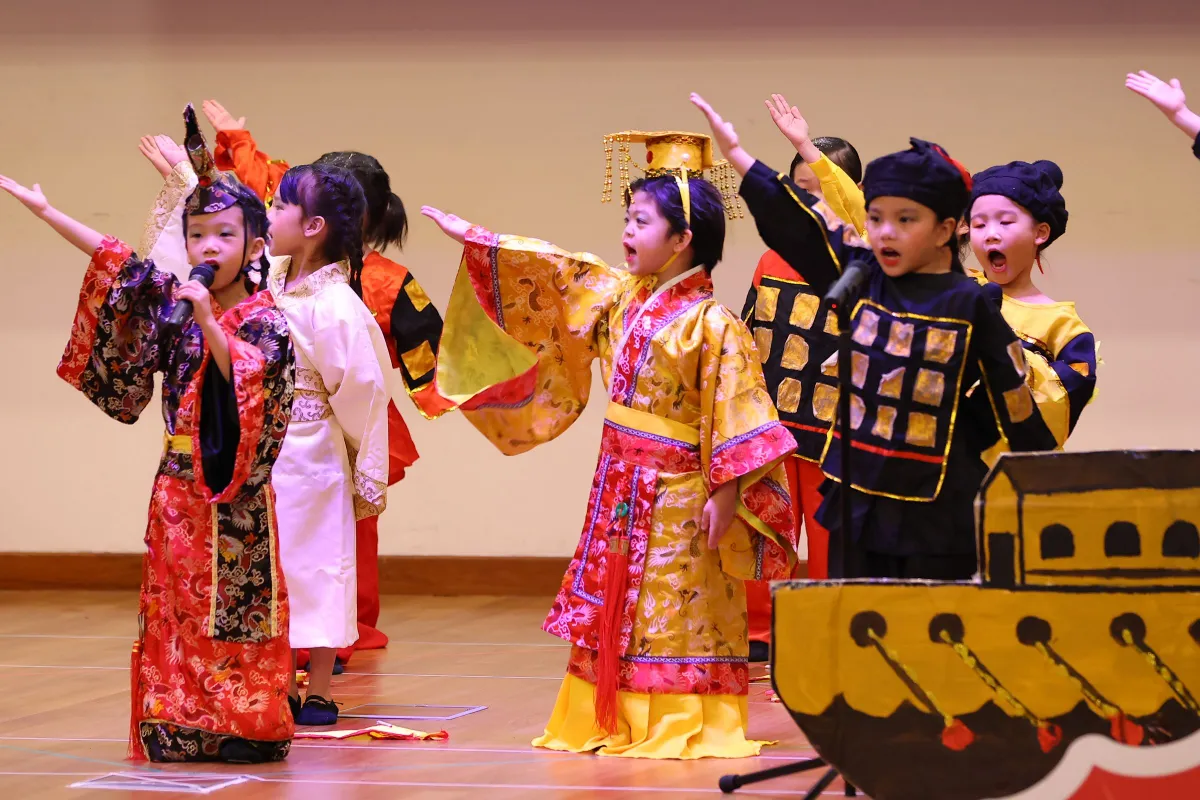
At ELFA Preschool’s year-end concerts, children display confidence and showcase their speech, communication and dramatisation skills which they have picked up during their Chinese Speech and Drama lessons
A high-quality Chinese immersion preschool programme does more than just teach Chinese words and sentence construction; it opens a child’s mind. At ELFA, we believe in holistic development, where language is the vehicle for understanding and appreciating Chinese culture.
Through activities like Chinese calligraphy, celebrating Mid-Autumn Festival, or listening to classic folk tales, children develop a deep and authentic connection to the culture. This fosters crucial 21st-century skills:
- Fostering Empathy and a Global Mindset: Understanding that cultures communicate and celebrate differently builds empathy and prepares children to be global citizens.
- Connecting with Heritage and a Billion People: For children of Chinese heritage, it’s a powerful link to their roots. For non-native speakers, it is a bridge to understanding one of the world’s most ancient and influential civilisations.
Will Learning Mandarin Confuse My Child or Delay Their English?
No. According to speech therapists, learning more than one language at a young age does not cause confusion or delays; in fact, it can enhance overall linguistic awareness.
Children are incredibly adept at differentiating between language systems. While they might occasionally mix words (e.g., “Mummy, can I have more niu nai (牛奶)?”), this is a normal and temporary phase of bilingual development. It demonstrates their brain is processing both languages.
Over time, they learn to separate them contextually, and their understanding of grammar and structure in one language can even reinforce their language skills in the other.
What to Look for in a High-Quality Chinese Immersion Preschool?
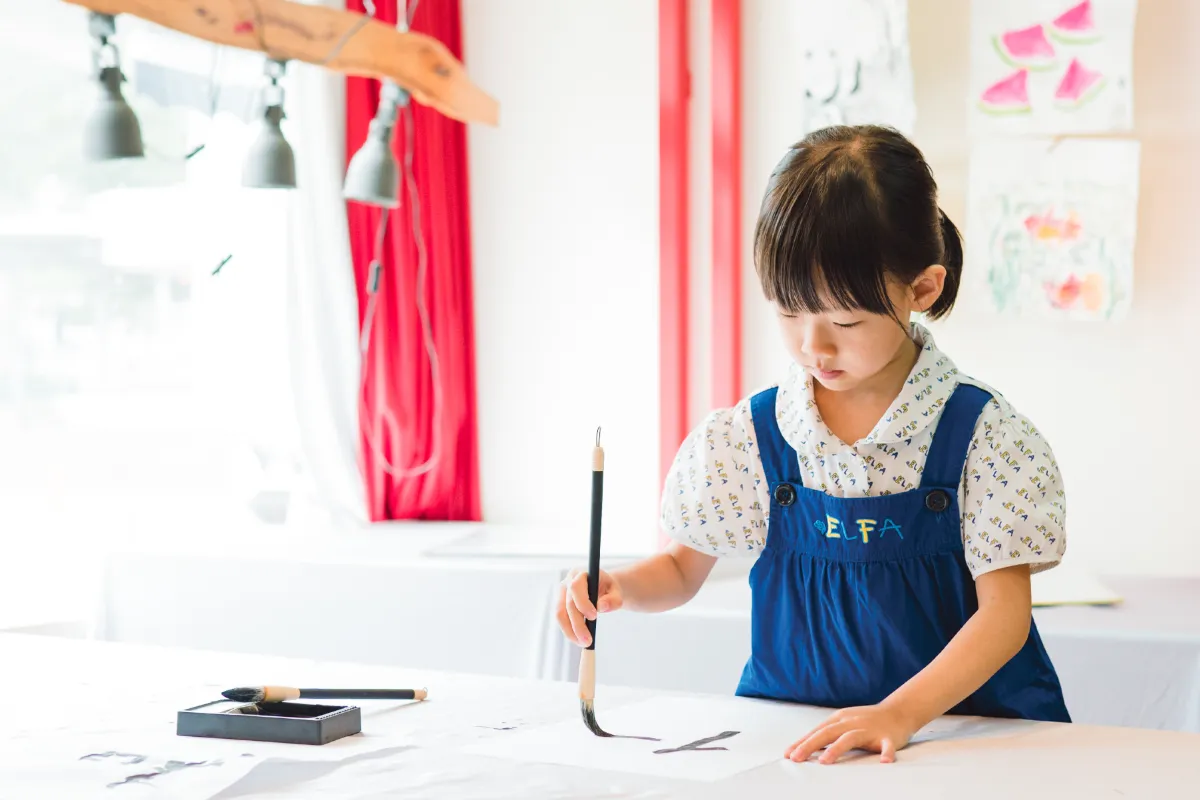
Young children doing calligraphy as part of ELFA’s mandarin immersion preschool curriculum
Choosing the right bilingual preschool is crucial for sustainable language development. Not all programmes are created equally. When touring a school, parents should look for specific indicators of a truly practical language immersion experience.
Here’s what matters:
- A Play-infused, Immersive Environment (Not Just a Class): The best programmes integrate Mandarin into every part of the day, from playtime to snack time. It shouldn’t feel like a 30-minute lesson but a natural way of communicating. The environment should be rich with Chinese books, posters, and learning materials.
- Native-Speaking, Nurturing Teachers: A native-speaking Chinese language teacher is essential for correct pronunciation and tones. Equally important is that these experienced educators are trained in early childhood pedagogy to nurture children in a warm, engaging manner. A low teacher-to-child ratio ensures each child gets the attention they need.
- Integration of Culture Beyond Language: The school’s curriculum weaves culture into daily activities. This includes art, music, storytelling, and hands-on projects that make learning meaningful and fun. Look for a holistic, story-based approach that goes beyond rote memorisation of Chinese vocabulary.
At ELFA, four signature strategies underpin our Mandarin learning approach:
- Story-based learning – Chinese folk tales, picture books and thematic stories bring language and culture together. Stories build vocabulary, sentence patterns, moral values, and cultural understanding, while strengthening listening comprehension and imagination.
- Learning through play – Young children learn best when they are engaged and moving. We use hand puppets, role-play, matching games, dramatisation and manipulatives to make Mandarin fun and meaningful. This play-based approach improves memory retention, especially for vocabulary and sentence structures.
- Chinese-inspired Creative Art exploration – Children take part in hands-on art inspired by Chinese culture, such as calligraphy, traditional paper cutting and festival crafts. Art deepens cultural connection while reinforcing Mandarin vocabulary linked to colours, shapes, festivals, and core themes.
- Chinese Speech & Drama – Drama activities give children the chance to practise expressive speech, storytelling and body language in Mandarin. They build confidence performing in front of others and develop clarity in pronunciation, articulation, and expressive speaking.
- A Clear Educational Philosophy: The school should be able to clearly articulate how its Chinese preschool programme supports character building, critical thinking, and a love for lifelong learning. They should be able to explain how they track a child’s progress in both languages.
A Lifelong Gift with Mandarin Immersion Preschool
The decision to start Mandarin immersion in preschool, rather than later, hinges on one principle: building a natural, intuitive, and lasting foundation.
By choosing a high-quality programme with a strong Chinese preschool curriculum catered for infant, playgroup, nursery and kindergarten levels, you are gifting your child a brain wired for problem-solving, a stronger foundation for future academic learning, and a more profound sense of empathy, culture, and global awareness.
At ELFA, our goal is not only Mandarin proficiency, but also a genuine appreciation of Chinese culture and language. The combination of early immersion, a culture-infused curriculum and formal assessments like YCT Level II prepares children for bilingual learning in primary school. Graduates enter Primary 1 with stronger confidence, readiness and a clear advantage in Mandarin.
Give your child a lifelong gift. Visit us at our infant care and preschool open house today.