





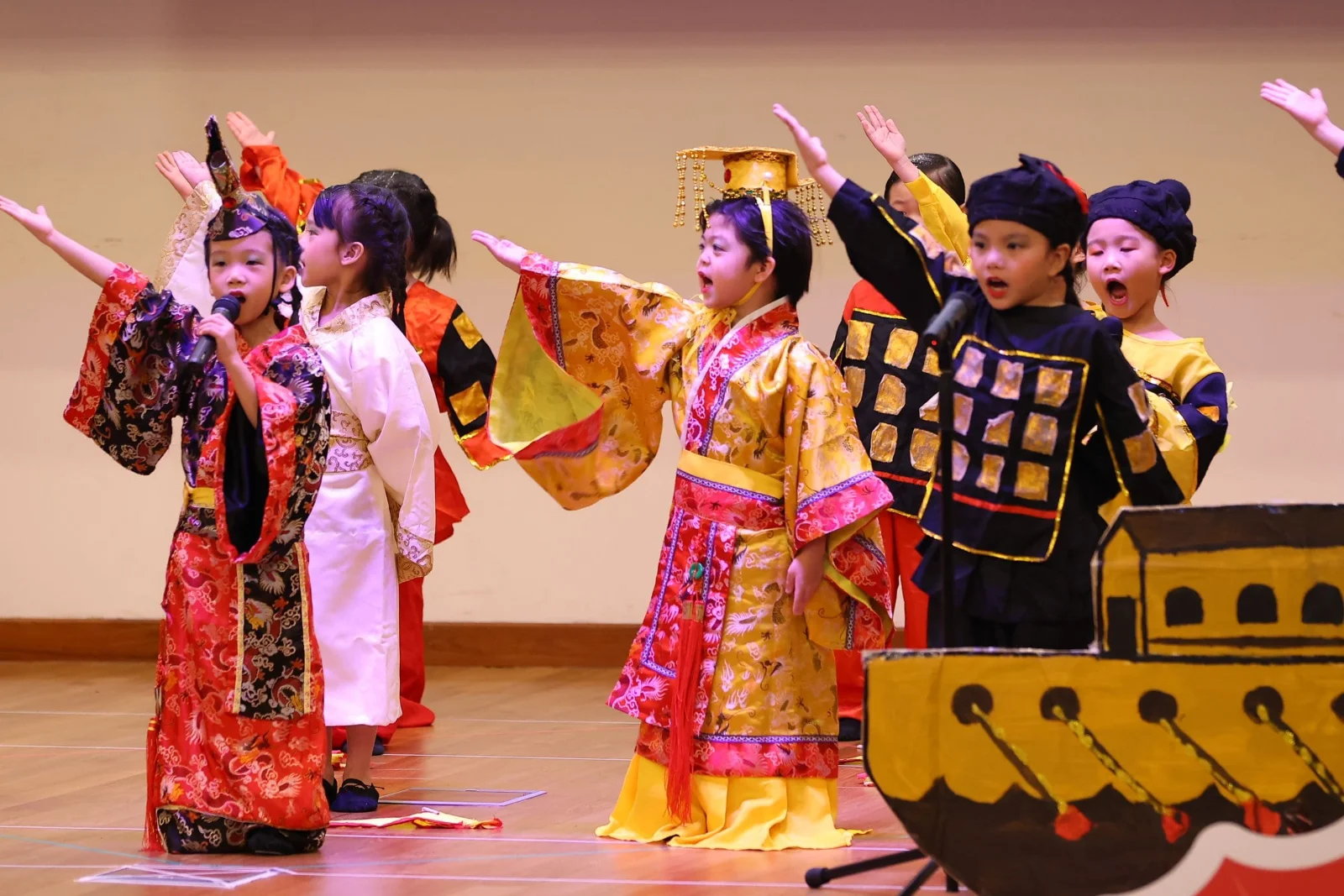
ELFA children delivered a confident and captivating performance of the Chinese Speech & Drama item, “Borrowing Arrows with Thatched Boats” (草船借箭) at ELFA’s graduation and year-end concert 2023
In one lively classroom, a child beams with excitement as he shares who he became that day—a legendary Monkey King. Around him, classmates take turns acting, speaking, and laughing together in Mandarin.
It may look like play.
But something powerful is happening.
Through Chinese Speech and Drama, children are not just learning Mandarin—they are fall in love learning it.
Why Some Children Struggle with Mandarin
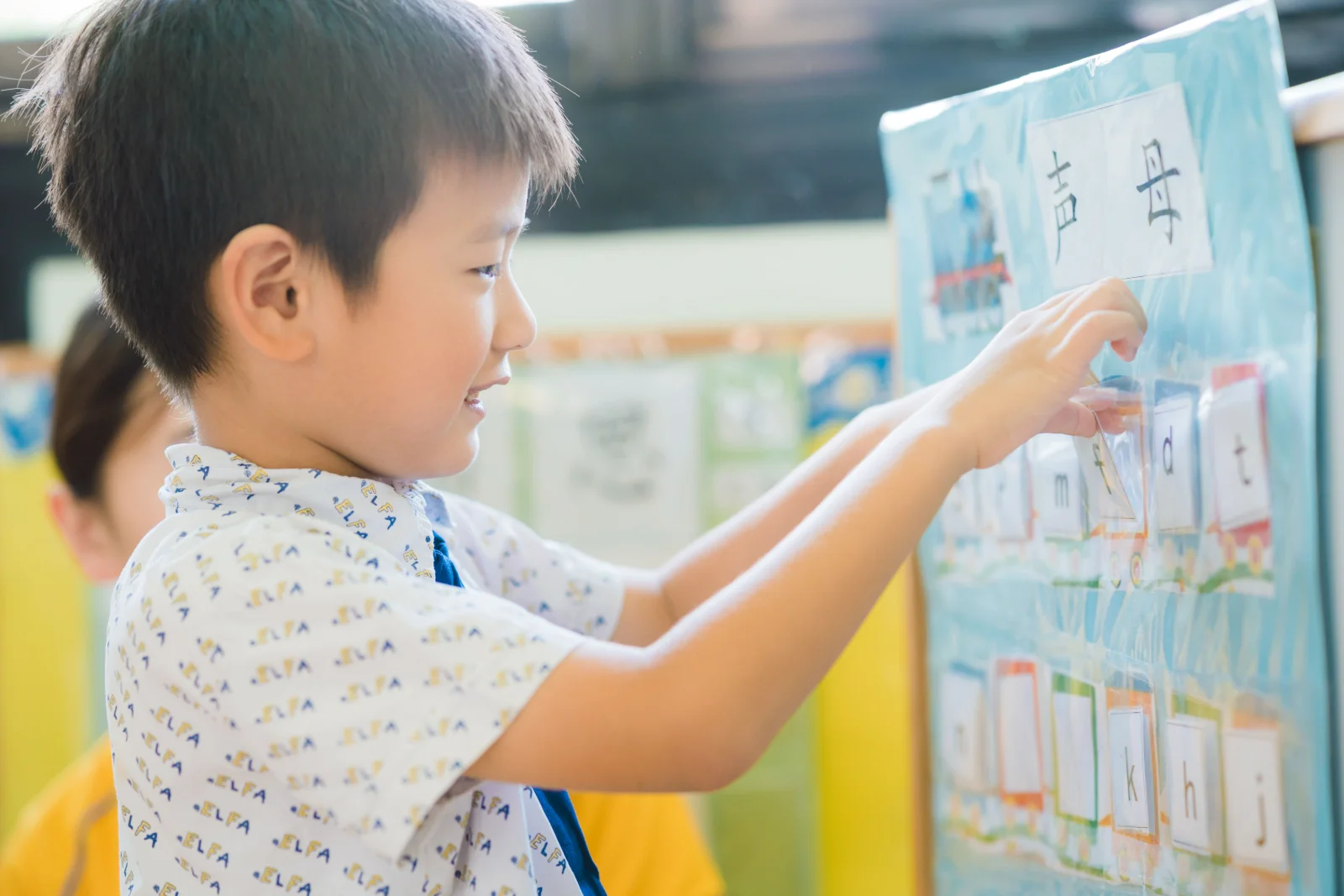
Kindergarten Two (K2) children from ELFA Preschool learn Hanyu Pinyin (HYPY) in preparation for the YCT Level II assessment
For many young children, Mandarin can feel difficult or even intimidating. It is often taught through memorisation—learning vocabulary, repeating sentences, and practising tones.
While these are important, they can sometimes make language feel like a chore instead of something enjoyable.
But children learn best when they are actively involved and engaged.
As highlighted in a Channel NewsAsia (CNA) article (26 January 2026), “parents often prioritise academic results, but the arts build confidence, empathy and broader life skills.”
This is why many educators are shifting towards more interactive and creative approaches to language learning.
Learning Mandarin Through Play and Expression
Chinese Speech and Drama bring Mandarin to life.
Instead of simply memorising words, children:
- Tell stories in Mandarin
- Act out characters and scenarios
- Speak and interact with their peers
Through these experiences, Mandarin becomes something they use, not just study.
Research in early childhood education shows that drama and imaginative play support language development. They encourage children to use more words and express ideas more clearly (Mages, 2008).
Growing Confidence to Speak
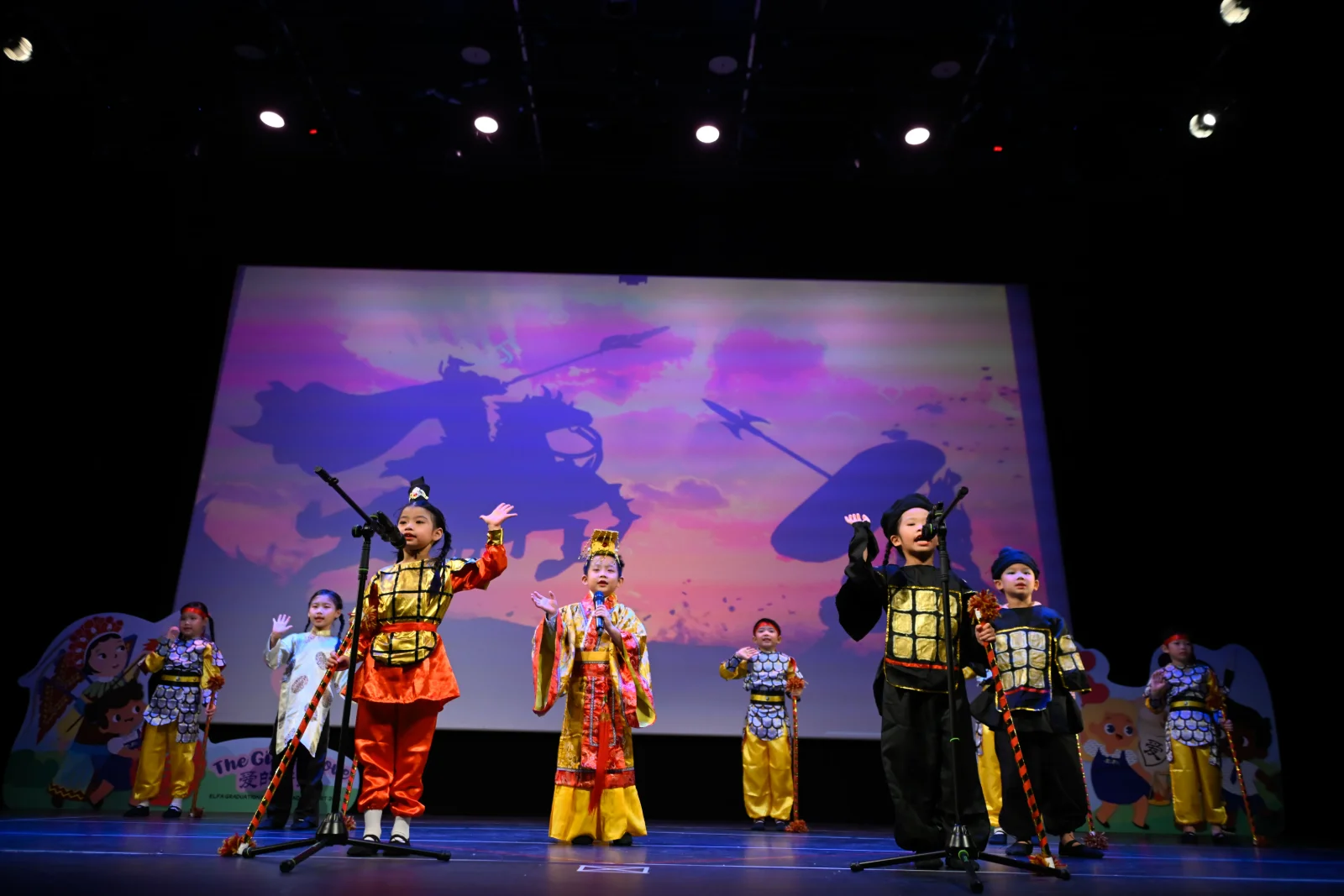
ELFA children displayed confidence and sharpness of speech through the Chinese Speech & Drama item, “Legendary Fighter: Yang’s Heroine” (巾帼英雄) at ELFA’s graduation and year-end concert 2024
One of the biggest challenges in learning Mandarin is confidence.
Many children understand the language but feel shy or hesitant to speak.
Speech and drama create a safe, supportive environment where children can:
- Practise speaking without fear of mistakes
- Express themselves through characters
- Perform in front of others in an encouraging setting
Over time, children become more comfortable using Mandarin in real situations—both in and out of the classroom.
Why Play Helps Children Learn Better
Young children naturally learn through play.
Through role-play and storytelling, they:
- Use language in meaningful contexts
- Practise communication with others
- Build stronger vocabulary and understanding
Studies on play-based learning show that it supports language development, social interaction, and early literacy skills (National Literacy Trust; Education Endowment Foundation).
When learning feels enjoyable, children are more likely to remember and apply what they learn.
More Than Language: Building Important Life Skills
Speech and drama do more than teach Mandarin.
It also helps children:
- Build confidence in expressing themselves
- Develop creativity and imagination
- Strengthen social and communication skills
- Learn to collaborate with others
These are essential skills that support children not just in school, but in everyday life.
The ELFA Approach
At ELFA Preschool, Chinese Speech and Drama is part of a holistic approach to learning Mandarin.
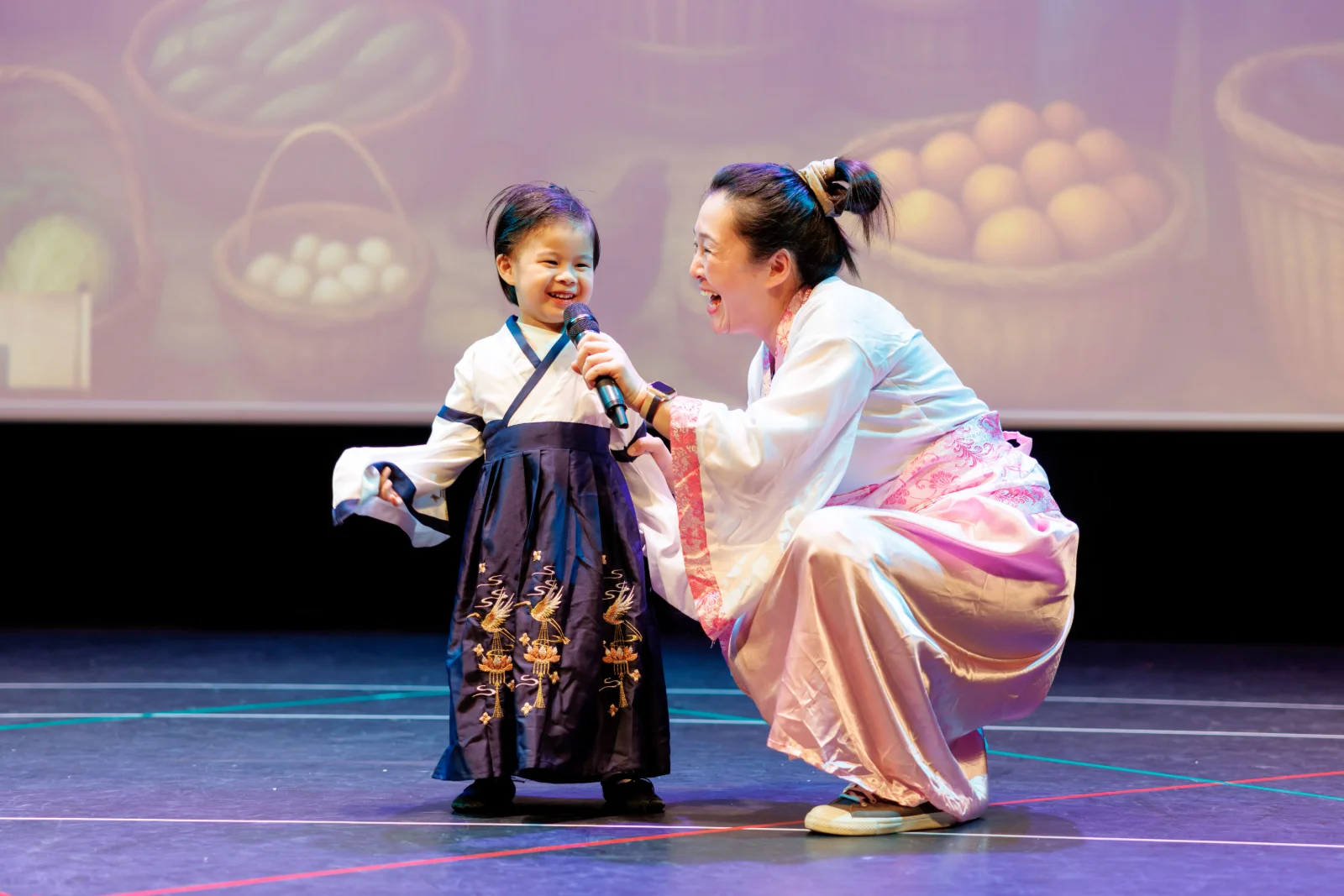
Our little ones are encouraged to express themselves on stage, guided and supported by ELFA educators
We believe children learn best when they:
- Feel engaged and motivated
- Are encouraged to express themselves
- Experience language in meaningful ways
By combining language learning with the arts, we help children build both strong communication skills and positive learning experiences.
Helping Your Child Love Mandarin
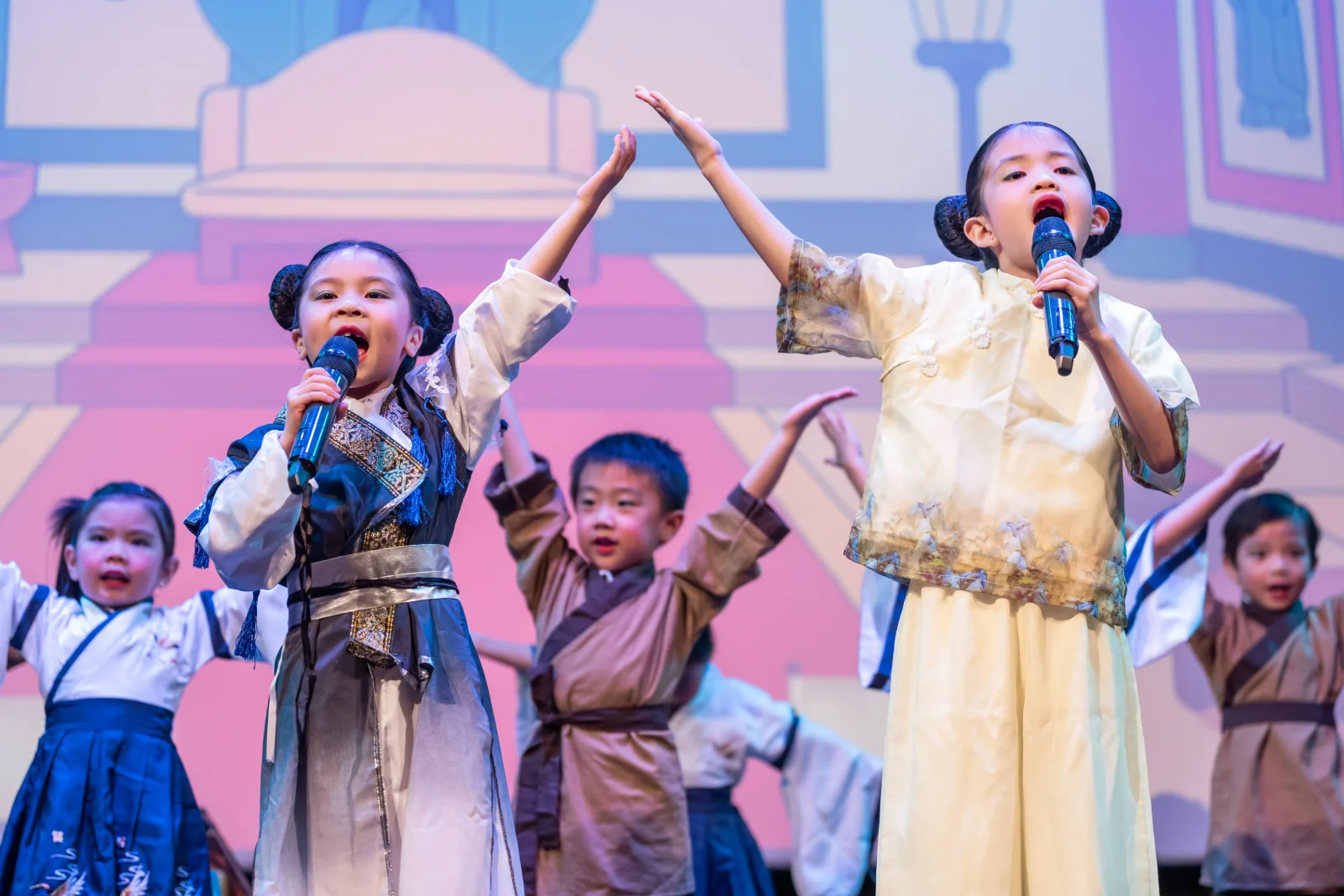
At ELFA Preschool’s year-end concerts, children display confidence and showcase their speech, communication and dramatisation skills which they have picked up during their Chinese Speech & Drama lessons
A love for language begins with positive experiences.
When children use Mandarin to imagine, act, and express themselves, it becomes something meaningful and enjoyable.
And when learning is enjoyable, it becomes lasting.
Chinese Speech and Drama help children move beyond memorising words—
to confidently using Mandarin as a natural part of who they are. And that is why in ELFA, Chinese Speech and Drama is one medium we use to promote the love for learning the language.
References
- Channel NewsAsia. (26 January 2026)
- Mages, W. (2008). Does Creative Drama Promote Language Development in Early Childhood?
- National Literacy Trust. The Power of Play in Early Language Development
- Education Endowment Foundation. Play-Based Learning and Early Outcomes